…..as Agabi urges anti-graft agencies to recover Nigeria’s stolen wealth from overseas
By Our Correspondent
The Economic and Financial Crimes Commission (EFCC), the Department of State Services (DSS) and the Nigerian judiciary have reaffirmed the need to leverage technology, including artificial intelligence (AI), in the fight against financial crimes.
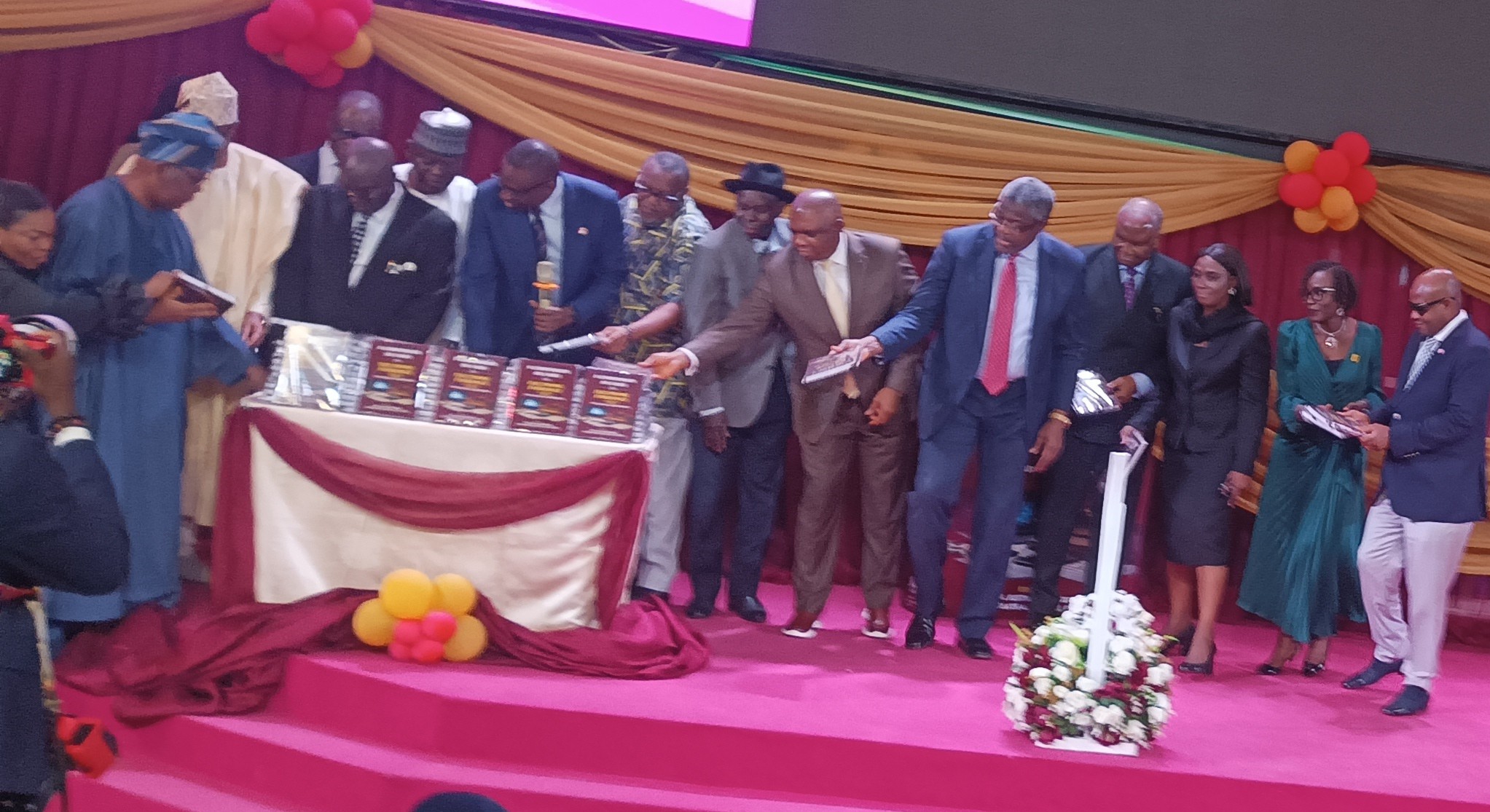
The renewed commitment was expressed at the public presentation of two books authored by retired Justice (Prof.) Alaba Omoleye-Ajileye: Electronic Evidence, Second Edition (With Evidence Act 2011) and A Compendium of Cases on Electronic Evidence, Volume II (2020–2025).
Delivering the keynote address, former Attorney-General of the Federation, Chief Kanu Agabi, challenged the nation’s anti-corruption institutions and the judiciary to intensify efforts to recover Nigeria’s looted wealth stashed abroad.
Addressing the gathering, which included the Chairman of the EFCC, the Director-General of the DSS, representatives of the Chief Justice of Nigeria (CJN) and the Attorney-General of the Federation, Agabi simply urged them to “bring back our billions.”
Responding to the challenge, EFCC Chairman Ola Olukoyede pledged the Commission’s commitment to recovering stolen assets and tackling financial crimes.
He described financial crimes as one of Nigeria’s greatest challenges, noting that they fuel insecurity, poverty and underdevelopment.
“There is no doubt that one of the major problems confronting this country is financial crime. Whether it is insecurity, poor economic development or poverty, the time has come for all of us to join hands and confront the problem,” he said.
Olukoyede noted that the devastating effects of financial crimes are often only fully appreciated by those who become direct victims.
“As Nigerians, we are all victims in one way or another, but when one of these internet fraudsters targets you personally, you begin to understand the extent of the damage they inflict,” he said.
He stressed that the EFCC was prosecuting both high-profile offenders and cybercriminals.
“We have secured the conviction of a former minister and a former permanent secretary within the last three months, and we are not relenting in our pursuit of internet fraudsters. The havoc they cause is greater than many people imagine,” he added.
The EFCC chairman also linked financial crimes to terrorism financing, revealing that the Commission recently prosecuted about 70 individuals accused of helping terrorists and bandits launder ransom payments through Point of Sale (POS) terminals.
“We lament the killings across the country, but this is one of the root causes. Until Nigerians unite against financial crime, the challenge will persist. Law enforcement agencies, citizens and the judiciary all have roles to play. Together, we can overcome it, and Nigeria will succeed,” he said.
Olukoyede further disclosed that the Commission had begun deploying artificial intelligence in criminal investigations, but stressed the need for legal reforms to address the admissibility of AI-generated evidence.
“We have started using AI in our investigations. The challenge now is how to generate evidence through AI and make it admissible in court. This goes beyond the current provisions of Section 84 of the Evidence Act.
“Today, robots can perform tasks previously done only by humans. We need our legislators and legal scholars to establish a committee that will develop laws to regulate AI and guide its use in criminal investigations and prosecution,” he said.
The Director-General of the Department of State Services, Oluwatosin Adeola Ajayi, also commended Justice Omoleye-Ajileye for his contributions to the development of electronic evidence in Nigeria.
He urged the retired jurist to further support efforts aimed at ensuring that offenders who violate the Cybercrimes Act are effectively prosecuted to serve as a deterrent.
Ajayi recalled his long-standing relationship with Justice Ajileye during his tenure as DSS Director in Kogi State, describing him as a mentor, friend and elder brother.
He narrated how Justice Ajileye had consistently expressed confidence that he would one day become Director-General of the DSS, even at a time when he was preparing to retire after 34 years of service.
“On April 1, during my 34th year in service, I informed everyone that I was counting down to retirement. Justice Ajileye did not receive that message. Instead, he came to my office and began discussing what I should do with electronic evidence when I became DG. I thought he had made a mistake because I believed I was leaving the service,” he recalled.
Ajayi said his admiration for Justice Ajileye stemmed from the jurist’s pioneering work on electronic evidence and its admissibility in court, describing it as a major contribution to criminal prosecution in Nigeria.
He also endorsed an earlier charge by Chief Wole Olanipekun (SAN) on strengthening cyber security and urged Justice Ajileye to continue contributing to legal reforms in that area.
The DSS boss noted that while security agencies prosecute offenders for crimes against the state, some lawyers, including Senior Advocates of Nigeria, defend them in court, adding that the law must ultimately take its course.
He also disclosed that the DSS had deliberately selected certain high-profile cases for prosecution because of their potential deterrent effect, including one involving a presidential aspirant accused of making disparaging remarks against a sitting president. He declined to comment further because the matter is pending before the court.
Ajayi called on Nigerians to collectively reject all forms of criminality, stressing that societies only progress when citizens who are not directly affected also stand up against wrongdoing.
He thanked Justice Ajileye for using his intellectual contributions to expand the frontiers of criminal justice administration in Nigeria.
The event attracted representatives of the Chief Justice of Nigeria, the Attorney-General of the Federation and Minister of Justice, the Chief Judges of the Federal Capital Territory and the Federal High Court, serving and retired Justices of the Supreme Court, Justices of the Court of Appeal, High Court judges, academics and other distinguished members of the Nigerian legal community.