FIRS, NNPC Ltd failed to remit petroleum profit tax for years – Senator Wadada

Share

By Our Correspondent

The Chairman, Senate Public Account Committee (SPAC), Senator Aliyu Wadada (Nasarawa West) has alleged that his committee wrote several invitations to the Federal Inland Revenue Service (FIRS) and Nigerian National Petroleum Company Limited (NNPCL) on the remittance of petroleum tax, but the agencies refused to make satisfactory clarifications.

Wadada noted that the FIRS in collaboration with the NNPC Ltd failed to remit petroleum profit tax to the federation account for a number of years.

“Federal inland revenue service in collaboration with NNPC, petroleum profit tax for a number of years have not been remitted to the right quarters.

“The committee had written both NNPC and the federal inland revenue service. Federal inland revenue service responded with documents that have been tipex and handwritten and acclaimed to be from JP Morgan. This is extremely unacceptable and all efforts for the need to be done have not been achieved” he lamented.

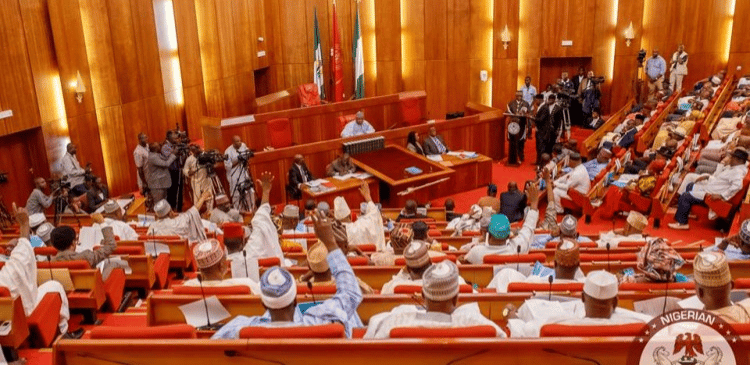
Wadada stated this while contributing to debate on Medium Term Expenditure Framework MTEF and Fiscal Strategy Paper FSP on the role of revenue generating agencies as prelude to 2025 appropriation bill.
See also  Dangote Refinery makes case for 100% Nigerian crude …as Senate probes alleged sabotage in petroleum industry By Our Correspondent The Dangote Refinery has made passionate appeal to the Senate, NNPCL, NUPRC, NDMPRA and other stakeholders in the industry to help supply the refinery its crude oil need 100 per cent from Nigeria. Group Strategy Officer, Dangote Refinery, Aliyu Suleiman made the appeal at the Senate Ad-hoc Committee probing alleged economic sabotage in petroleum industry at the Senate Complex, Abuja on Wednesday. He said right now, the refinery bought about 50 million barrels of crude out of which about 60% comes from NNPC. Mr. Suleiman who expressed gratitude to NNPC for their support, added that, essentially, all they are asking is for them to get their crude requirement from Nigeria 100%. “Let's be very clear, we are happy to pay fair prices. We hope that we'll work with the regulator and we'll get their support so that the refinery can get 100% of its crude from Nigeria and buy the crude from companies that produce it in Nigeria not from international middlemen. “We count on support of the committee, the regulators and other stakeholders to ensure that the refinery succeeds, because if it does, aside from the other obvious benefits, like forex generation, job creation and the rest, most importantly, there is the psychological benefit of making, giving Nigerians, Africa in general, the confidence that we can succeed. Giving a progress update on the refinery, Mr. Suleiman said since the refinery started full trial production in January and then full time production started in March, we processed about 50 million barrels of crude. “We have produced about five million tons of petroleum products. And these petroleum products have been sold to various parts of the country and Jet oil has been sold in Europe since May. He said other products have been sent to places as far as Asia, US, Brazil, and so on. So the refinery has been making a lot of progress. He emphasized the importance of deliberately protecting local industries for the over all economic development of the country. According to him, “the US, for example, has done that, to protect their own industries against attack by China that subsidize their own industries and then sends them to the US. So that's the first question. We want to urge the committee to consider if we deserve protection against them”. He posed three basic questions that revolved around protection of local industries for the consideration of the committee and Nigerians at large. The questions are: “Do local refineries deserve protection from NUPRC? “Should Nigeria protect its infant industries in order to improve investment? “Should local refineries have preferential access to Nigerian crude? He said Dangote found itself competing against Russian products that were produced with oil that is valued at $60. “We all know that because of the cap that has been put Russian oil, the value of Russian oil today in the market is $60. And that's what Russia is using to produce their products and those products are being sent in large quantities into Africa to compete with products that are produced in refineries that buy crude at $90. “We don't think this will be a fair competitive environment and I think that when you have such unfair competition, it is normal to put protective measures. “I think even in the animal world, the moment a new baby is born, they don't just go and leave it out in the wild. “What we want is to sell more of our products in Nigeria, because we believe we can do that, we can compete. And even though there are concerns that have been expressed around monopoly, that is a problem that has been identified. The right thing to do is to say, how do we address this problem? If monopoly is a risk, how do we address this risk while at the same time ensuring that we protect our domestic industries? The good thing is that in the PIA, there are provisions around that, you can monitor and take action if you feel there's monopoly.

Leave a Reply

Your email address will not be published. Required fields are marked *