By Our Correspondent
Deputy President of the Senate, Senator Barau Jibrin, has challenged former Vice-President Yemi Osinbajo’s gloomy assessment of Nigeria’s economy and democratic governance, insisting that President Bola Ahmed Tinubu’s administration is taking steps to address the country’s longstanding challenges.
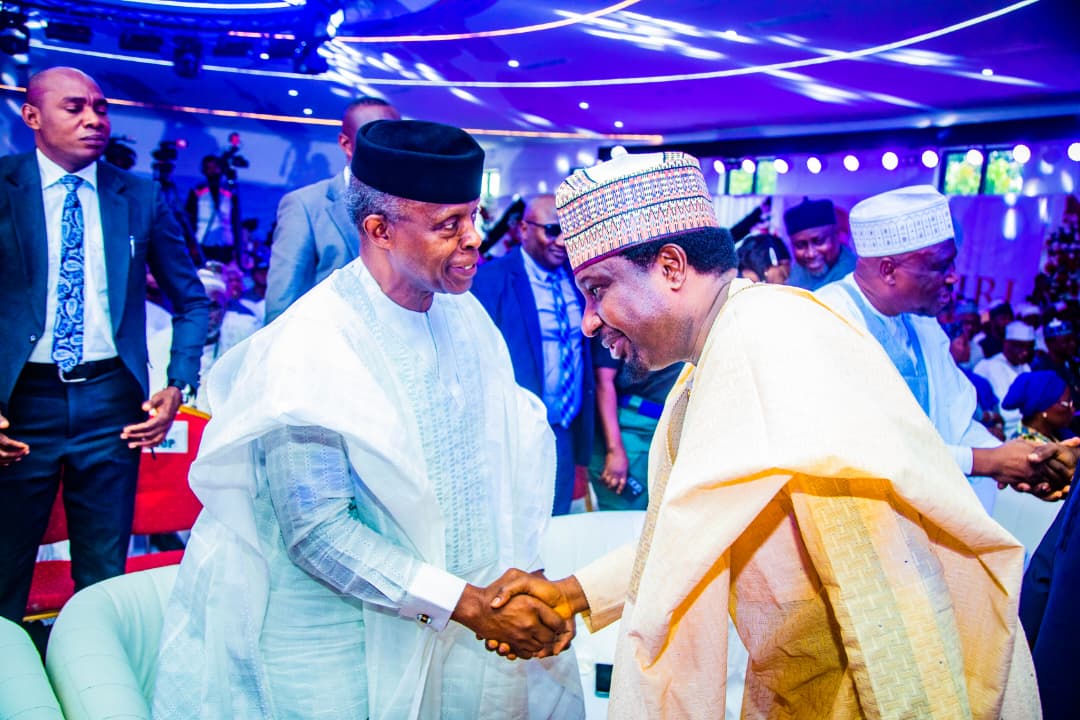
Barau, who spoke on Tuesday in Yola, Adamawa State, during a public lecture marking Governor Ahmadu Umaru Fintiri’s 59th birthday, acknowledged concerns raised by Osinbajo but attributed part of the negative public perception to poor communication between government and citizens. Osinbajo had cited Afrobarometer surveys showing widespread economic hardship, declining public confidence in democratic institutions and reduced youth participation in elections.
According to the former Vice-President, although 64 per cent of Africans preferred democracy to other forms of government, only 38 per cent were satisfied with how democracy was working, while 59 per cent considered their national economies to be in bad shape.
Responding, Barau described Osinbajo’s presentation as thought-provoking but argued that governments at both federal and state levels were implementing measures to tackle the identified problems. He cited the Nigerian Education Loan Fund (NELFUND) as an intervention expanding access to education, particularly for young people from disadvantaged backgrounds.
He also pointed to ongoing infrastructure projects, including the Lagos-Calabar Coastal Highway and the Badagry-Sokoto Highway, as evidence of the Tinubu administration’s efforts to address infrastructure deficits and stimulate economic growth. He maintained that improved road networks, water supply and other essential facilities were critical to economic prosperity.
On rising living costs, Barau said Nigeria’s economic difficulties were partly linked to global pressures, including the Russia-Ukraine war and conflicts in the Middle East, which have disrupted supply chains and increased energy and production costs worldwide. He cited volatility around the Strait of Hormuz as another factor affecting international energy markets, stressing that “Nigeria is not an island” and could not be insulated from global economic developments.
The Deputy President of the Senate, who is also First Deputy Speaker of the ECOWAS Parliament, urged political leaders and public officials to improve communication with Nigerians by explaining government policies, ongoing projects and interventions more effectively. He said sustained public engagement was necessary to bridge the gap between citizens’ expectations and their understanding of government efforts towards economic recovery and national development.