…Considers trimming N58.472trn 2026 budget proposal
By Our Correspondent
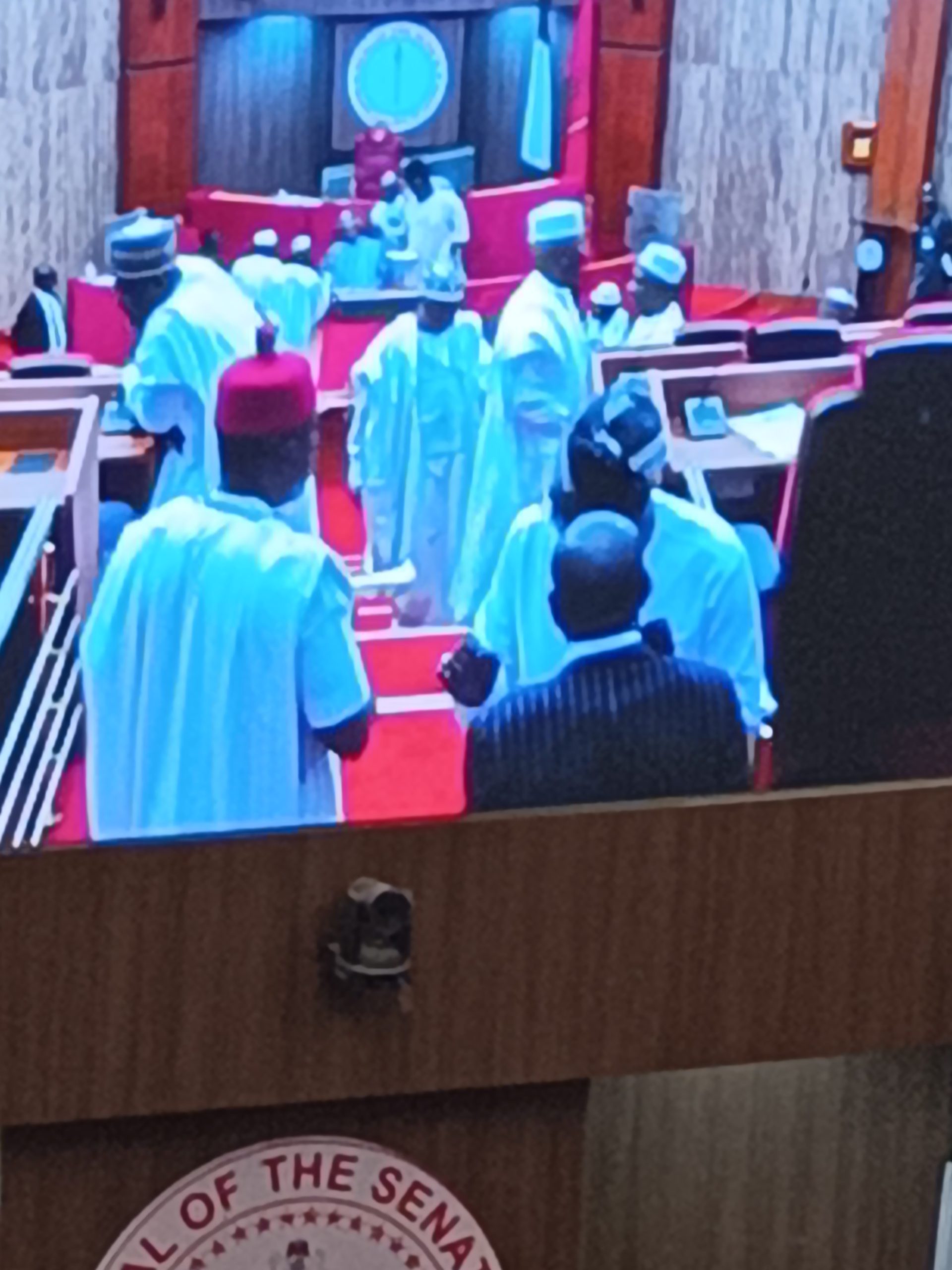
The Senate on Thursday confronted President Bola Tinubu’s Economic Team over persistent shortcomings in budget implementation, particularly the recurring failure to release capital allocations to Ministries, Departments and Agencies (MDAs).
The Chairman of the Senate Committee on Appropriations, Senator Solomon Olamilekan Adeola (Ogun West), led the engagement during a crucial interactive session with the economic team headed by the Minister of Finance and Coordinating Minister of the Economy, Wale Edun. The meeting focused on the feasibility of implementing the proposed N58.472 trillion 2026 budget and concluding the capital components of the 2024 and 2025 budgets by March 31, 2026.
During the session, the Minister of Finance, Mr. Wale Edun, was first called to respond to concerns raised by the committee. His explanation that the capital components of the 2024 and 2025 budgets were still being funded did not satisfy the lawmakers.
The Chairman of the Nigeria Revenue Service (NRS), Dr. Zacch Adedeji, however, defended the position of the economic team, telling the committee that unrealistic assumptions inevitably lead to poor implementation outcomes.
According to him, budget financing must be anchored on credible projections, stressing that efficiency should be measured not by the size of the budget but by what can realistically be executed.
“If you assume you have ten units and spend within that limit, it is manageable. But if you assume you have one hundred units and plan expenditure on that basis, you risk serious challenges if the expected funds fail to materialise,” he explained.
In response, Senator Adeola reminded the NRS boss that the budget proposals originated from the Executive arm of government, of which the revenue agency is a part.
“This document came from the Executive. The projections and the challenges are from the Executive, not the Legislature. There is a significant gap between projected and actual oil revenue performance.
“For instance, how do we reconcile an 18 per cent performance in one year with a projection of 36.5 per cent the following year, when actual outcomes remain below expectations?
“The question before us is whether to reduce the N58.472 trillion 2026 budget or proceed with it and make necessary adjustments. Debt financing is already high. If certain assets are sold and applied to debt reduction, it would lower the debt stock and potentially reduce future borrowing costs,” he stated.
The Minister of State for Finance, Dr. Doris Nkiruka Uzoka-Anite, assured the committee that full implementation of the 30 per cent capital component of both the 2024 and 2025 budgets would be achieved before March 31, 2026.
She disclosed that funding processes for the 2025 budget were underway and that payments for outstanding 2024 capital projects would commence immediately.
“The financial management system is now operational. MDAs have been directed to upload their cash plans by Monday, after which disbursements will begin. We are prepared to proceed, but the MDAs must complete the required documentation,” she said.
The committee subsequently went into a closed-door session with the economic team, which lasted about two hours.
Also present at the meeting were the Minister of Budget and Economic Planning, Senator Atiku Bagudu, and the Accountant-General of the Federation, Shamsedeen Babatunde Ogunjimi.